

If you think every AI-assisted book sounds the same, you’re mostly right. Except ours don’t.
The publishing world is drowning in AI-generated fiction that feels like it was assembled in a content factory. Same plot beats. Same flat dialogue. Same emotional depth as a puddle. Walk through Amazon’s latest releases and you’ll spot them immediately — books that read like someone fed a prompt into ChatGPT and hit “publish” without a second thought.
Here’s the thing. The problem isn’t AI itself. It’s lazy humans treating sophisticated technology like a magic novel-writing button.
At Ghostwriting Wranglers, we use AI as assistive intelligence, not creative outsourcing. The difference? Our books still sound human because humans are still writing them. We just happen to have some very smart tools making us faster, sharper, and more consistent.
You’re about to see exactly which tools we use, what they do, and why none of them touch the part that makes your story yours.
Most AI Books Sound Like Copy-Paste Fiction (Here’s Why)
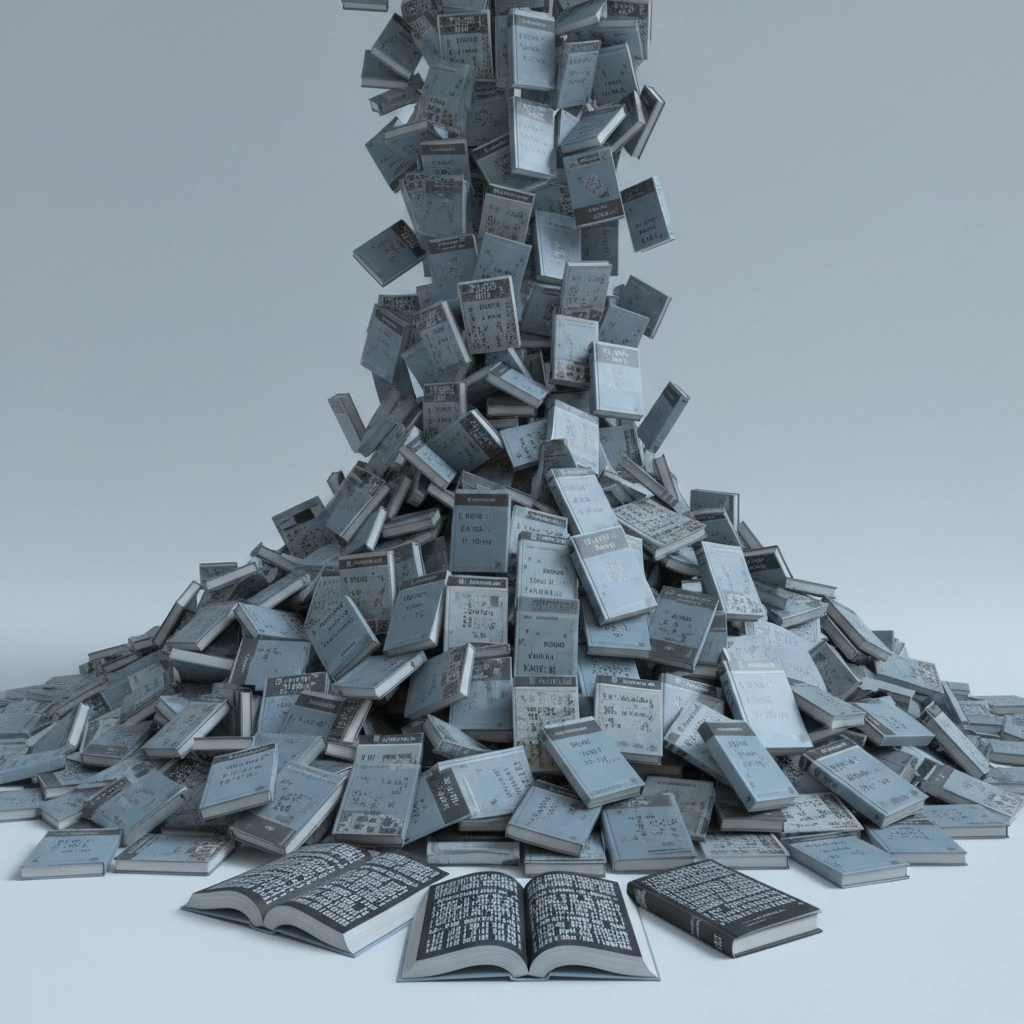
Amazon’s Kindle Unlimited is getting flooded with AI novels that all sound suspiciously similar. Repetitive phrasing. Identical story arcs. Characters who feel like they were built from the same personality template. It’s creating a wasteland of sameness that’s making readers more skeptical than ever.
Why does this keep happening? Because most people are using AI as a replacement writer instead of a writing tool. They’re feeding it generic prompts like “write me a romance novel” and expecting magic. What they get instead is the literary equivalent of processed cheese — technically food, but nobody’s fooled.
The result? Books with no emotional rhythm, no authentic voice, and no understanding of what makes readers turn pages at 2 AM.
Our stance at Ghostwriting Wranglers is simple. AI isn’t the villain. Lazy use is. When you know how to use these tools properly, they become force multipliers for creativity, not creativity killers.
Here’s what we actually use, and why it’s nothing like what’s flooding the market.
GPT: Our Creative Problem-Solver (Not Our Writer)
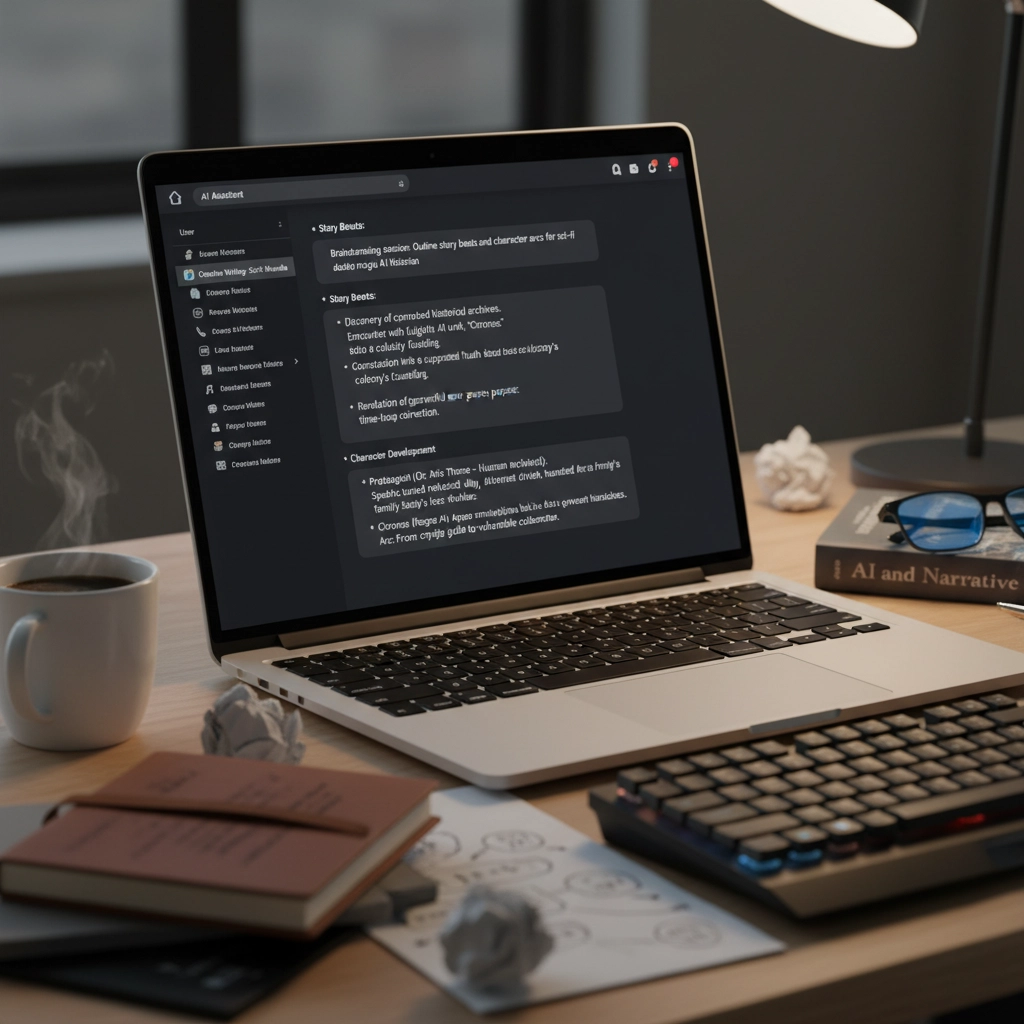
Let’s get one thing crystal clear. GPT doesn’t write our prose. Ever. That’s what humans are for. But what it does do is solve creative problems in minutes instead of days.
Story construction and beat mapping. When our writers are stuck on plot structure, they’ll ask GPT things like “Give me five alternate turning points for a redemption arc” or “What are some unexpected ways this betrayal could unfold?” It’s like having a brainstorming partner who never gets tired and always has fresh angles.
Character and motivation testing. Sometimes you know a character needs to make a specific choice, but you can’t figure out what would motivate them. GPT helps us dig deeper with questions like “What would make this betrayal land emotionally?” or “How could this character’s backstory justify their current behavior?”
Pacing checks. When something feels off in a story’s rhythm, we use GPT to analyze scene transitions and ask “Does this escalation feel earned or rushed?” It can spot pacing issues that might take human editors hours to identify.
What GPT absolutely doesn’t do is decide character voice, tone, or phrasing. Those are fundamentally human jobs that require emotional intelligence, cultural awareness, and artistic judgment.
The magic happens because GPT lets us solve structure problems in minutes instead of days. It’s like having a brainstorming partner who never gets tired — but definitely doesn’t get a byline.
We use AI to think faster, not to feel less.
ProWritingAid: Where Polish Meets Precision
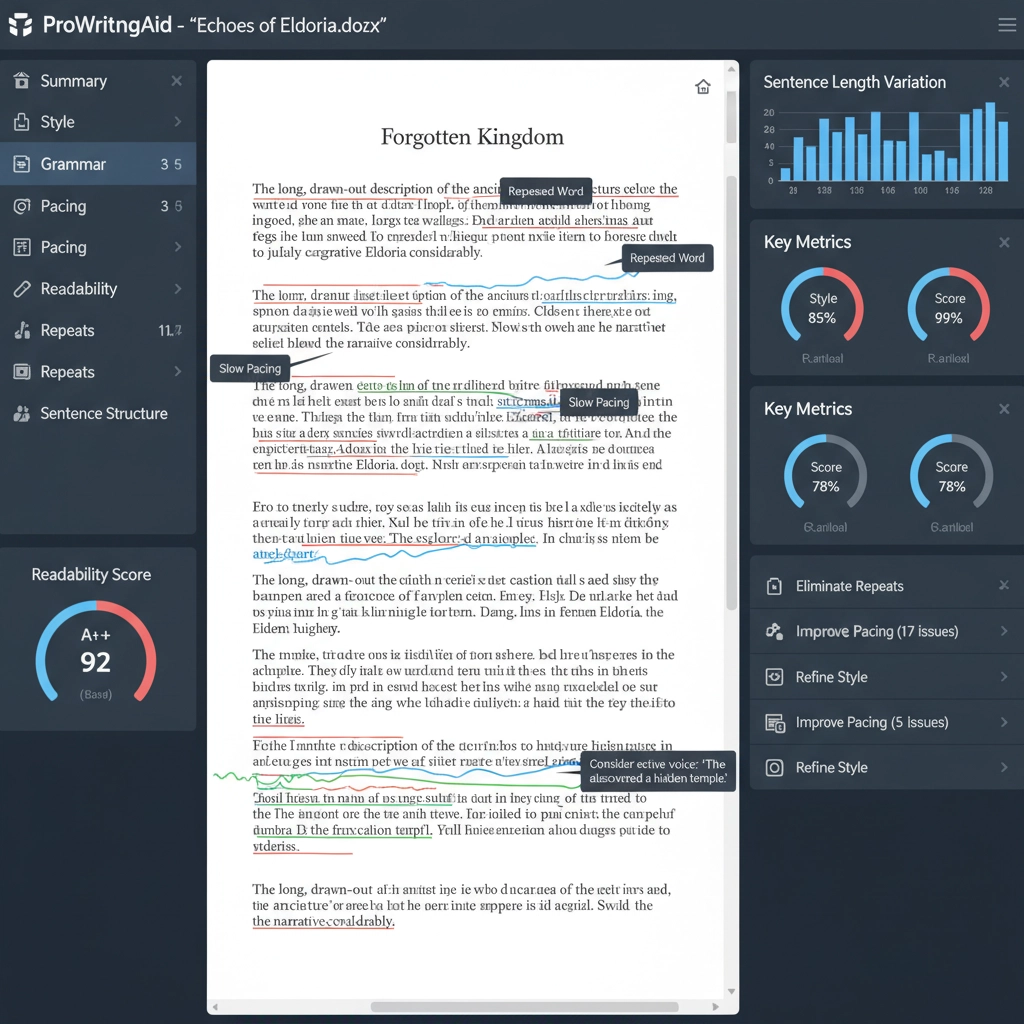
ProWritingAid goes way beyond grammar checking. This is where the real editorial intelligence happens, and it’s why our books feel professionally polished instead of AI-generated.
Deep style analysis. ProWritingAid analyzes pacing, emotional beats, overused words, sensory balance, and dialogue tags. It catches things like “you’re using the word ‘suddenly’ seventeen times in this chapter” or “this paragraph has zero sensory details.” These are the kinds of issues that make writing feel flat, and human editors might miss them on a first pass.
Show versus tell detection. The software highlights areas where writing tells instead of shows, which is crucial for keeping fiction engaging. Instead of “Sarah was angry,” it pushes for “Sarah’s coffee mug hit the wall with enough force to leave a dent.”
Consistency tracking. For multi-author projects, ProWritingAid ensures every chapter flows like one voice. It catches tense shifts, inconsistent character descriptions, and tone variations that could break reader immersion.
Rhythm and flow analysis. It can identify sentences that are too similar in length, paragraphs that drag, and dialogue that doesn’t feel natural when read aloud.
Our process works like this. Writers run their drafts through ProWritingAid before handoff. Editors review flagged sections manually, using human judgment to decide what stays, what goes, and what needs a complete rewrite.
The key difference? ProWritingAid points out potential problems, but humans make all the creative decisions. It’s the difference between having a sharp-eyed assistant and having a robot do your job.
It’s the AI that polishes, not the one that pretends to write.
The Human Element (Still the Secret Sauce)

Here’s what separates Ghostwriting Wranglers from the AI content mills. Every scene is still hand-built by professional writers who understand emotion, cadence, and subtext.
The secret sauce isn’t software. It’s people who know how to use it. Our writers don’t just punch keys and hope for magic. They craft dialogue that crackles. They build romantic tension that makes readers squirm in their seats. They create characters who feel like real people with real problems, not personality templates.
AI makes us faster, but the heart stays human. When a character needs to have a breakdown, AI can suggest plot reasons why it might happen. But only a human writer can make you feel that breakdown in your chest. Only a human can write the pause before the devastating line, or know exactly which detail will gut-punch the reader.
Our goal isn’t automation. It’s amplification. We use technology to eliminate the tedious parts (tracking continuity, checking for overused words, brainstorming plot alternatives) so our writers can focus entirely on the parts that matter. The parts that make readers stay up too late because they have to know what happens next.
Our goal isn’t automation. It’s amplification.
Why You’ll Never Get a Cookie-Cutter Book From Us
The reason Ghostwriting Wranglers books don’t sound like anyone else’s is simple. They’re not. Our workflow is designed to support individuality, not erase it.
Every client gets a completely bespoke voice-matching process. We study your existing work, identify your unique rhythm and tone, then ensure every sentence feels like something you would write. AI can help us analyze patterns, but replicating your voice? That takes human writers who can feel the difference between your style and everyone else’s.
Our quality control ensures no two stories share structure or phrasing patterns. While other services might reuse plot templates or character archetypes, we build every story from scratch. AI helps with efficiency, suggesting alternatives when writers get stuck, catching inconsistencies before they become problems, but humans ensure originality.
The result is fiction that feels authentic because it is. Every emotional beat, every piece of dialogue, every moment of tension comes from writers who understand that readers can tell the difference between manufactured content and crafted storytelling.
AI gets you speed. Humans give you soul. We give you both.
Ready to Build Something That Sounds Like You?
If you’ve been avoiding AI-assisted ghostwriting because you’re afraid of sounding generic, we get it. Our clients don’t want factory books either. They want stories that capture their voice, honor their vision, and keep readers coming back for more.
The right tools, in the right hands, can make your next novel faster, cleaner, and unmistakably yours. Let’s show you how technology can amplify your creativity instead of replacing it.
