
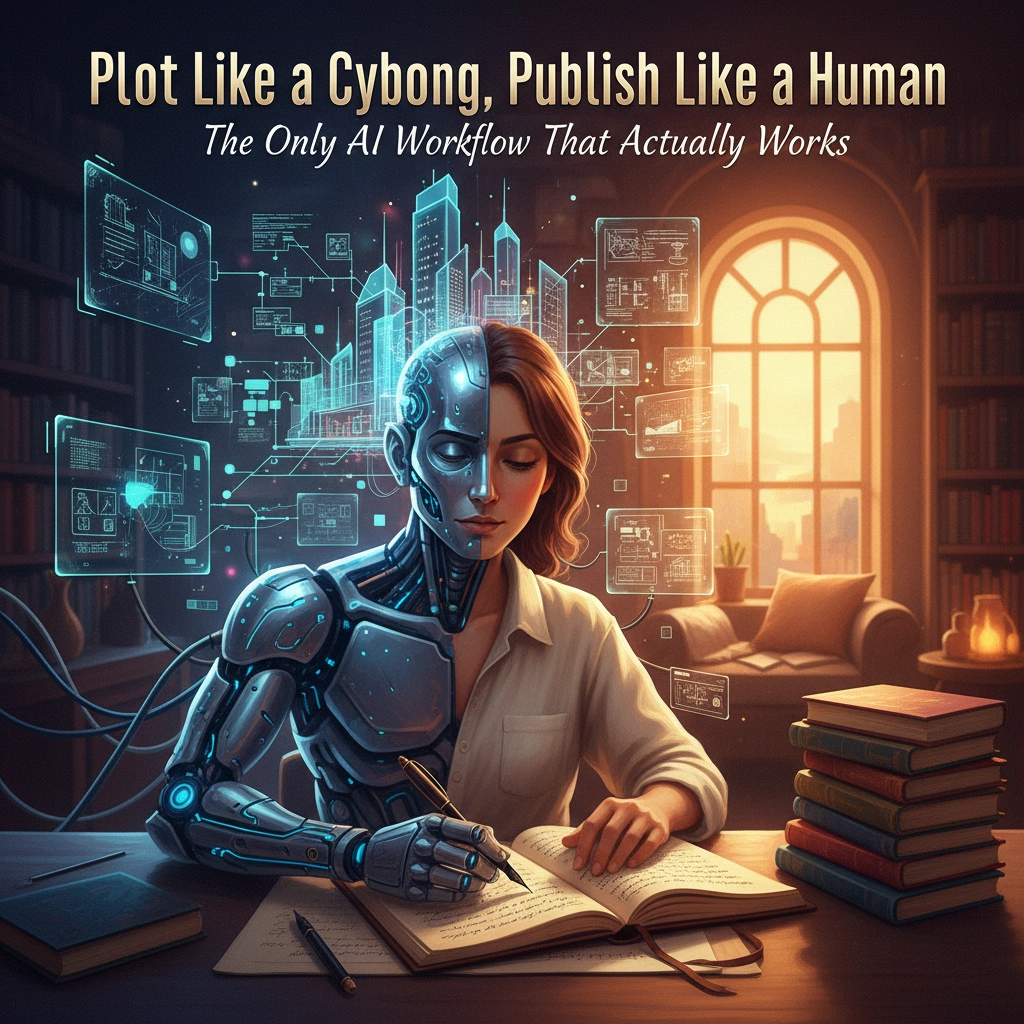
You’ve probably tried it. Fed ChatGPT a prompt like “write me a 80,000-word romance novel about a barista who falls in love with a mysterious customer” and waited for literary magic.
What you got instead was 50 pages of robotic dialogue, a hero who forgot his own backstory halfway through, and a plot that wandered off like a drunk tourist in Vegas.
Here’s the thing: AI isn’t your ghostwriter. It’s your very caffeinated brainstorm buddy who never sleeps and has read literally everything: but also forgets what happened three chapters ago and thinks character development means adding more adjectives.
The indie authors actually making money with AI aren’t letting robots write their books. They’re using AI to think faster, plot smarter, and then handing the real work to humans who understand that details make stories, not word count.
Why AI Can’t Write Your Bestseller
AI has the attention span of a goldfish on espresso. It can generate beautiful prose for exactly as long as you’re looking at it, then completely forget that your protagonist had brown eyes, not blue, or that the love interest was supposed to be brooding, not cheerful.
Feed it a 300-page outline and by chapter 12, your carefully crafted mystery will have plot holes you could drive a truck through. Your character’s motivations will shift like weather patterns. Your world-building will collapse faster than a house of cards in a hurricane.
This isn’t AI being bad at its job. It’s AI doing exactly what it was designed to do: predict the next most likely word based on patterns, not remember that Sarah’s father died in chapter 3, which is why she can’t trust commitment.
The robots are excellent at generating text that sounds like a book. They’re terrible at writing books that feel like stories.
What AI Actually Does Well (Plot Twist: It’s Not Writing)
Here’s where AI becomes your secret weapon instead of your disappointment: ideation, brainstorming, and creative problem-solving.
Need 47 different ways your detective could discover the murder weapon? AI’s got you covered in thirty seconds.
Stuck on how to get your characters from Point A to Point B without it feeling forced? AI will throw twenty creative solutions at you, half of which you’d never think of.
Want to explore “what if” scenarios for your plot without committing to writing full scenes? AI can sketch out possibilities faster than you can say “plot bunny.”
The magic happens when you stop asking AI to write your book and start asking it to help you think about your book. It becomes the world’s most enthusiastic writing partner: the one who never gets tired of your questions and always has seventeen new ideas to try.
The Cyborg Workflow That Actually Works
Step one: Brain dump with your AI buddy. Describe your concept, characters, general plot direction. Let AI ask questions, suggest complications, propose character arcs. This isn’t writing: it’s creative conversation.
Step two: Build your skeleton. Use AI to help develop a detailed chapter-by-chapter outline. Get specific about plot points, character motivations, key scenes. This is where you maintain creative control while letting AI suggest structure and pacing.
Step three: Test your weak spots. Ask AI to poke holes in your logic. “What would happen if…?” “How would this character react when…?” “What if the villain’s motivation was actually…?” Let it challenge your assumptions.
Step four: Hand off to a human. Take your rock-solid outline: complete with character arcs, plot points, and scene-by-scene breakdown: and give it to a ghostwriter who can actually write.
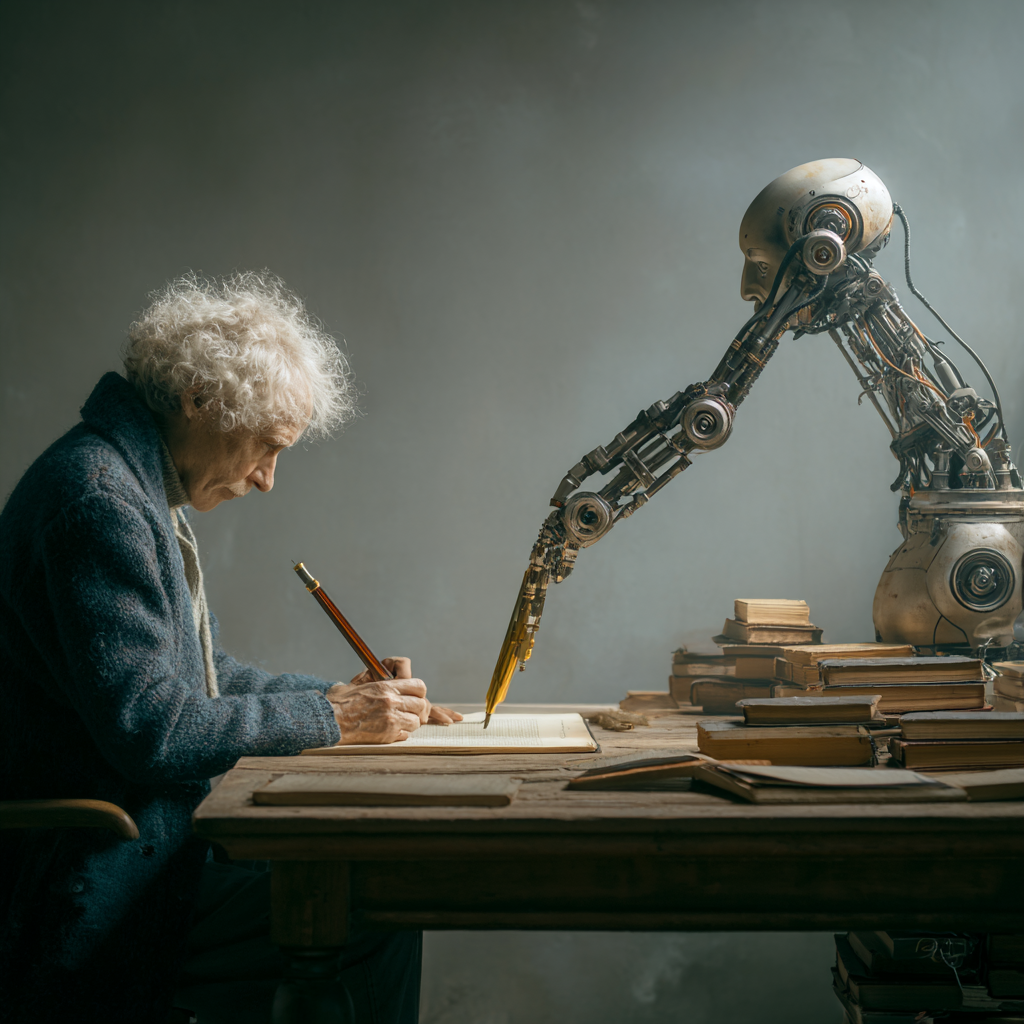
The human writer handles dialogue that sounds natural, descriptions that create atmosphere, pacing that builds tension, and all those tiny details that make readers care about fictional people.
Why Details Matter More Than Word Count
You know what makes readers fall in love with books? The moment when a character does something so specific, so human, that it feels real.
The way your heroine always orders her coffee with exactly two sugars because that’s how her grandmother made it. How your villain unconsciously touches his scar when he lies. The fact that your small town smells like pine trees and disappointment.
AI doesn’t do specific. It does generic. It writes “she sipped her coffee thoughtfully” when what you need is “she wrapped both hands around her mug like it was the only warm thing in her life.”
A human ghostwriter working from your detailed outline can layer in the sensory details, emotional nuance, and character quirks that transform your plot from a series of events into a story worth reading.
The Structure-First Strategy
Think of AI as your incredibly smart research assistant and brainstorming partner. It helps you develop the intellectual property: the unique concept, the compelling characters, the twist-filled plot: while you maintain creative control.
Your job is architect: design the building, choose the materials, decide on the style. The ghostwriter’s job is construction: actually building something beautiful and functional from your blueprints.
This keeps you in creative control of your IP while dramatically speeding up your production timeline. You’re not outsourcing your vision: you’re outsourcing the execution of your vision.

When Collaboration Stops Feeling Like Cheating
Some indie authors worry that using AI plus human ghostwriters somehow makes them “not real writers.” That’s like saying film directors aren’t real filmmakers because they don’t operate the cameras themselves.
You’re developing the story. You’re making the creative decisions. You’re ensuring the vision stays consistent. You’re just using better tools to execute faster.
The readers don’t care how the book got written. They care whether the story works, whether the characters feel real, whether they stayed up until 3 AM because they had to know what happened next.
Your Next Move
Stop trying to make AI write books. Start using AI to make your books better.
Brainstorm with it. Plot with it. Let it help you solve creative problems and explore possibilities. Then hand your killer outline to a human who can make your characters breathe and your dialogue crackle.
The combination is unstoppable: AI’s creative horsepower plus human nuance and detail work. You get books that feel authentic and alive, published at a pace that builds your readership and your bank account.
If you’re ready to try this workflow but need help finding the right human to turn your AI-assisted outlines into actual books readers love, that’s exactly what we do. We know which ghostwriters understand story structure, which ones excel at specific genres, and how to set up collaborations that protect your vision while hitting your deadlines.
The cyborg approach works. But only when you get the human part right.
Contact us for a no-obligation conversation to see if we’re a fit for each other.
