

Here’s the thing about AI writing your novel: it’s like asking a brilliant toddler to navigate a cross-country road trip.
Sure, they’ll chatter enthusiastically for the first fifty miles. They might even surprise you with some clever observations. But somewhere around Kansas, they’ll forget where they’re going, insist they’ve been to the Grand Canyon (they haven’t), and confidently direct you into a cornfield.
That’s AI with long-form fiction. Impressive at the start. Catastrophic by chapter twelve.
If you’ve tried letting ChatGPT or Claude draft your manuscript, you’ve probably discovered this the hard way. Your protagonist starts the story in Chicago, somehow teleports to Miami without explanation, and by the climax, they’re solving a completely different problem than the one you set up in chapter one.
Welcome to the wonderful world of AI-generated plot holes.
Why AI Thinks Your Story Makes Perfect Sense (Spoiler: It Doesn’t)

AI doesn’t understand stories the way humans do. It understands patterns.
When it writes, it’s essentially playing the world’s most sophisticated game of “what word comes next?” based on millions of examples. But novels aren’t just sequences of pretty words : they’re intricate machines where every part has to connect to every other part.
AI can nail individual scenes. It can write gorgeous dialogue, compelling action sequences, even emotional character moments that’ll make you tear up. But ask it to remember that your protagonist hates coffee throughout a 300-page manuscript? Good luck.
Here’s what happens:
Memory gaps bigger than your plot holes: AI forgets what it wrote three chapters ago. Character names change. Established rules get broken. That sword your hero claimed in chapter two? Apparently it never existed.
Teleporting characters: Your protagonist ends a scene in their apartment, starts the next one at work, with zero explanation of how they got there. Time and space mean nothing to AI.
Emotional amnesia: A character has a life-changing revelation in chapter eight. By chapter ten, they’re acting like it never happened.
The result? Stories that feel like fever dreams : technically coherent sentence by sentence, but utterly bonkers when you zoom out.
The Fatal Flaw: AI Doesn’t Know What Stories Actually Do
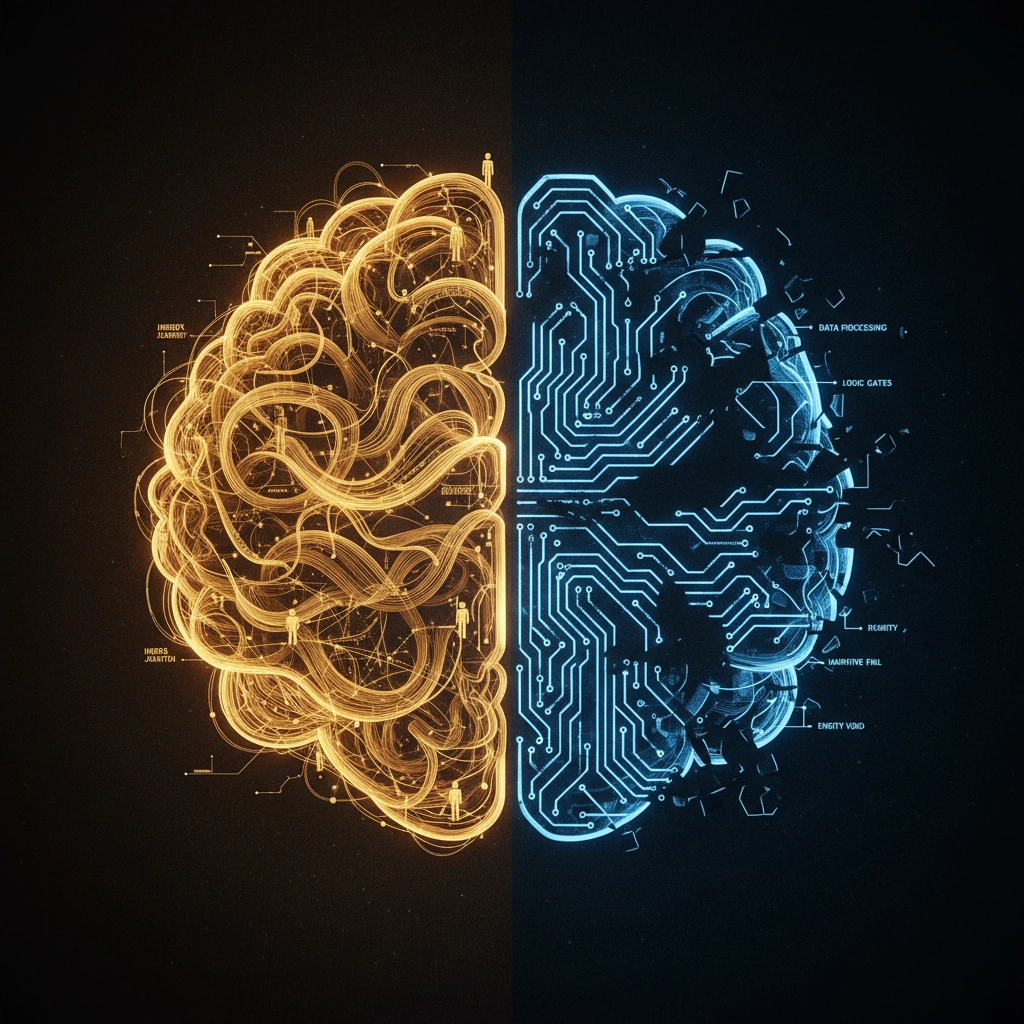
Here’s the deeper problem: AI doesn’t have a theory of mind.
It can’t understand that stories exist to create emotional experiences in human brains. It doesn’t know that readers form expectations in chapter one that must be addressed by the ending. It has no concept of setup and payoff, cause and effect, or why certain story beats hit harder than others.
So you get:
Climaxes that solve the wrong problem: Your story promises a battle against corporate corruption, but the AI writes a climax about the protagonist’s daddy issues instead.
Missing story beats: Plot point one happens immediately after the inciting incident, skipping all the character resistance and growth that makes readers actually care.
Repetitive scenes: Characters have the same conversation three times because AI doesn’t track what emotional ground you’ve already covered.
One author described editing an AI novel as finding scenes where characters would sit around explaining the plot to each other instead of living it. Classic AI move : it knows information needs to be conveyed, but not how stories actually work.
The Right Way to Put AI to Work (Without Breaking Your Brain)
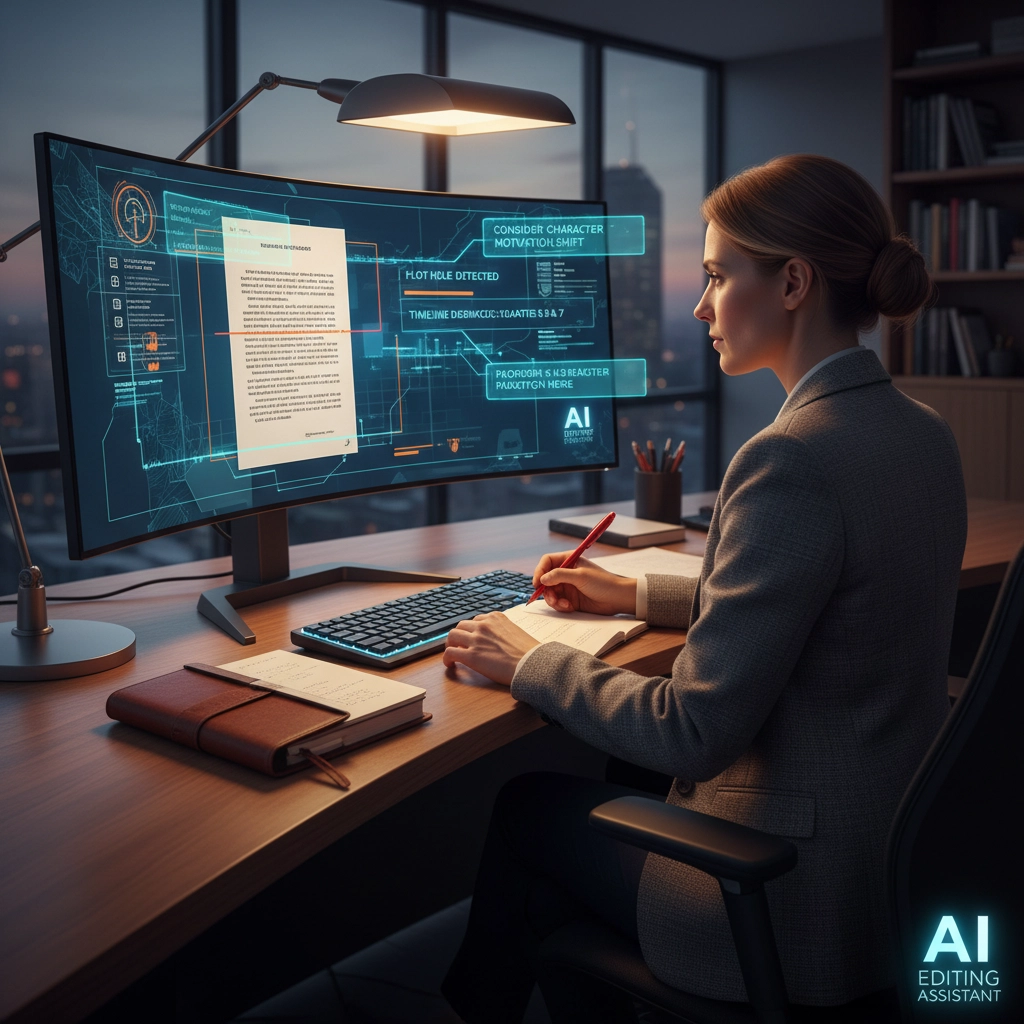
Before you swear off AI forever, here’s the plot twist: AI is actually brilliant at finding plot holes.
Just not at avoiding them in the first place.
Think of AI as the world’s most detail-obsessed beta reader. It can catch timeline inconsistencies, character name changes, and logical gaps that human eyes miss during revision. One novelist described asking ChatGPT to review their complete outline : and getting a list of problems that would have taken hours to spot manually.
The trick is using AI as your assistant, not your replacement.
Here’s the workflow that actually works:
Step 1: You Write the Blueprint
Start with your own detailed outline. Know your story arc. Understand what each major scene needs to accomplish. Map out your character journeys, plot threads, and emotional beats.
AI can help brainstorm ideas, but the structural decisions : the bones of your story : need to come from a human brain that understands narrative craft.
Step 2: Let AI Spot the Cracks
Once you have your outline, ask AI to review it specifically for:
- Timeline inconsistencies
- Logical gaps between scenes
- Missing setup for major plot points
- Character motivation problems
Prompt it like this: “Review this outline for plot holes, timeline issues, and logical inconsistencies. What’s missing between these major scenes?”
Step 3: Generate Selectively
If you want AI to draft scenes, give it incredible detail about what needs to happen. Don’t just say “write a confrontation scene.” Say “Character A confronts Character B about X betrayal, B tries to justify it by revealing Y secret, A realizes Z about themselves, scene ends with A making decision to do W.”
The more specific your direction, the less room for AI to wander into plot hole territory.
The Secret Weapon: Informed Creative Decisions
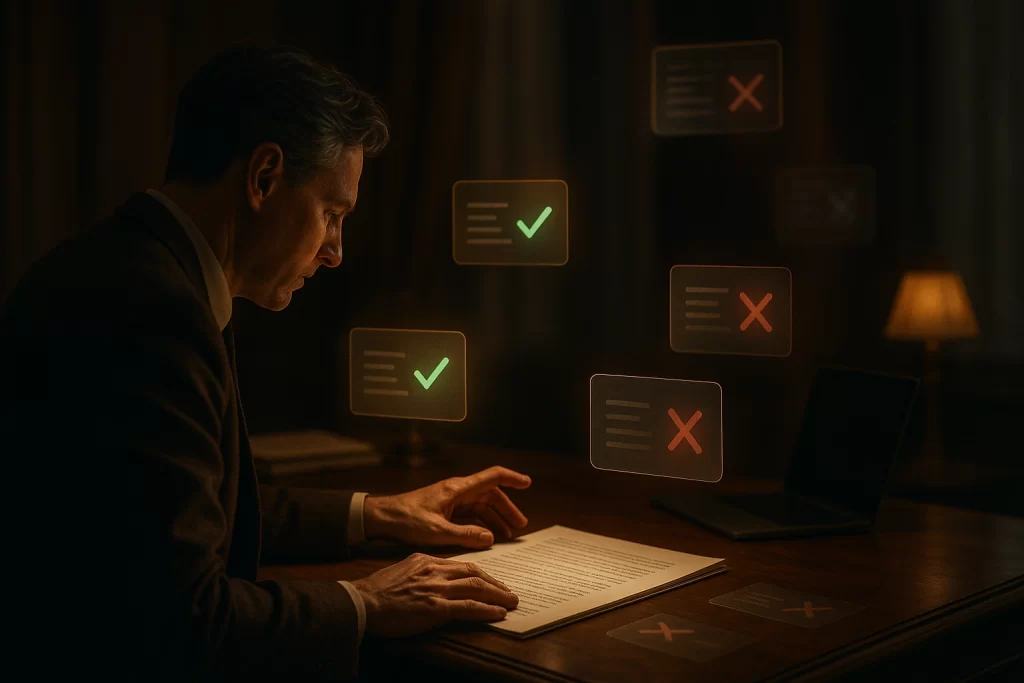
Here’s what separates writers who use AI successfully from those who create hot messes: knowing when to ignore it.
AI will confidently suggest things that break your story. It might want to put your climax in chapter three, eliminate crucial character development, or introduce plot elements that contradict everything you’ve established.
The difference between a skilled author and someone blindly accepting AI output is knowledge : understanding story structure well enough to know when AI’s suggestions serve your vision and when they’re just digital nonsense.
One author discovered their AI kept flagging a villain’s deliberate deception as a “plot inconsistency.” The AI couldn’t distinguish between actual errors and intentional misdirection. That’s the kind of nuance that requires human judgment.
Your AI-Assisted Writing Toolkit
Want to use AI without losing your sanity? Here’s your battle plan:
For Outlining:
- Use AI to generate “what if” scenarios and plot possibilities
- Ask it to identify missing scenes between major plot points
- Have it check timeline logic across your story arc
For Drafting:
- Give AI detailed scene breakdowns, not vague instructions
- Use it for specific tasks: dialogue drafts, description paragraphs, action sequences
- Never let it write more than one scene at a time without your review
For Editing:
- Ask AI to flag continuity errors across your manuscript
- Use it to spot repeated phrases, character name inconsistencies, timeline problems
- Question every “plot hole” it identifies : sometimes AI doesn’t understand your story’s logic
The Bottom Line:
AI can’t write your novel because it doesn’t understand what novels are supposed to do. But as a brainstorming buddy, continuity checker, and detail-obsessed assistant? It’s pretty spectacular.
Just don’t let it drive. You’re still the one with the roadmap.
Ready to Write Faster Without Plot Disasters?
That’s exactly what we help authors do at Ghostwriting Wranglers. We work with writers who want to use AI intelligently : to speed up their process without sacrificing the human insight that makes stories actually work.
You bring the vision and story structure. We bring the writers who know how to execute it flawlessly.
