
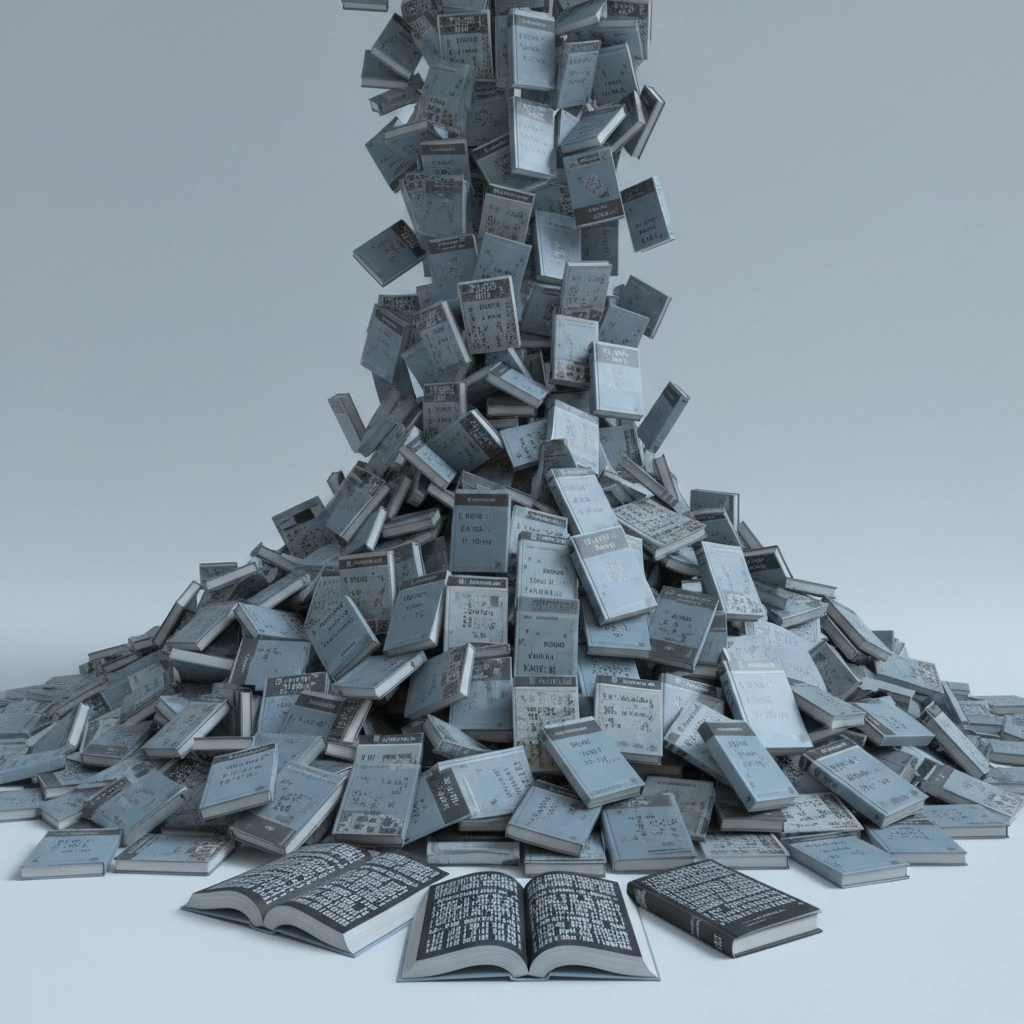
If AI could write a bestseller, the Kindle charts would be full of them by now. Instead, we’re watching a spectacular crash in real time.
The promise was seductive. Push a button, get a novel. Upload to Amazon, collect royalties. Scale infinitely without the messy human parts like creativity, voice, or actual storytelling skill.
But here’s the thing about promises that sound too good to be true, they usually are. The flood of AI-generated fiction hitting every platform isn’t creating a new generation of successful authors. It’s creating a wasteland of forgettable books that readers can spot (and avoid) from orbit.
Professional authors know something the AI-only crowd doesn’t. Speed without soul isn’t a business model. It’s a recipe for obscurity.

The Gold Rush That Turned Into a Landfill
The numbers tell a brutal story. The Authors Guild didn’t mince words in their 2024 report. They called it a “new surge of sham books” flooding Amazon’s marketplace. Low-quality fiction generated entirely by AI systems, uploaded by the thousands daily, creating a digital landfill where readers used to discover their next favorite series.
This isn’t just about oversupply. It’s about trust collapse. When your platform becomes synonymous with machine-generated garbage, even legitimate authors suffer. Visibility plummets. Reader confidence erodes. The entire ecosystem starts eating itself.
Amazon’s algorithms were designed to reward engagement and reader retention. They weren’t built to handle an influx of books that readers actively avoid once they realize what they’re dealing with. The result? A race to the bottom where everyone loses except the platforms collecting upload fees.
When Machines Try to Write Like Humans (Spoiler Alert: They Can’t)
Your Readers Can Smell Fake From Three Chapters Away
AI can mimic style, but it can’t manufacture soul. Coyote Tracks noted in their 2024 analysis that machine-written fiction consistently lacks “depth or originality”, the exact qualities that turn casual readers into devoted fans who buy everything you publish.
Human voice isn’t just word choice or sentence structure. It’s the rhythm between thoughts, the unexpected turns of phrase, the way vulnerability seeps through even the most polished prose. AI generates text that looks right on the surface but feels hollow underneath. Readers sense that disconnect immediately, even if they can’t articulate why.
The Trope Trap That Kills Creativity
Large language models are pattern-matching machines. Feed them enough romance novels, and they’ll give you the same alpha billionaire with the same dark secret falling for the same feisty heroine who “isn’t like other girls.” Every. Single. Time.
The pattern became so obvious that Clarkesworld Magazine shut down submissions because they were drowning in “obviously machine-written” sci-fi stories. When even genre magazines, notorious for their acceptance of formulaic plots, start rejecting AI submissions en masse, you know the problem runs deeper than just quality control.

Memory Problems That Break Reader Immersion
Ask any series reader what ruins a book fastest they’ll tell you it’s continuity errors. AI systems have notorious problems with long-term memory. They can’t maintain character consistency across chapters, let alone books. Eye color changes mid-scene. Character names shift. Plot points established in chapter two vanish by chapter ten.
Indie authors discover this the hard way when their “finished” AI drafts contain repeated scenes, contradictory character descriptions, and plot holes you could drive a truck through. The editing required to fix these problems often takes longer than writing the book from scratch.
When Readers Fight Back (And Win)
The backlash isn’t just theoretical. Futurism reported in 2023 about an AI prompt that accidentally made it into a published fantasy romance novel, triggering immediate reader ridicule and refund demands. The book became a cautionary tale, shared across social media as an example of everything wrong with AI publishing.
Readers don’t just dislike AI-generated books, they actively hunt for them. Review bombs, social media callouts, and organized boycotts have become standard responses when readers discover they’ve been sold machine-generated content without disclosure.
The Performance Problem That Kills Careers
The New Publishing Standard’s 2025 analysis was devastating for AI-only publishers. Most AI-generated books “struggle on engagement and review metrics”. The exact metrics Amazon’s algorithms use to determine visibility and success.
Poor reader retention signals tell the platform that your book isn’t worth recommending. Low review scores push you further down search results. Without verified purchases and positive reviews, your book disappears into the digital void, taking your author reputation with it.
The Detection Arms Race You Can’t Win
Here’s the worst part for AI-only publishers — they’re fighting a losing battle against detection technology. An Arxiv study from 2024 demonstrated that machine-generated fiction can be identified with 95% accuracy using computational analysis.
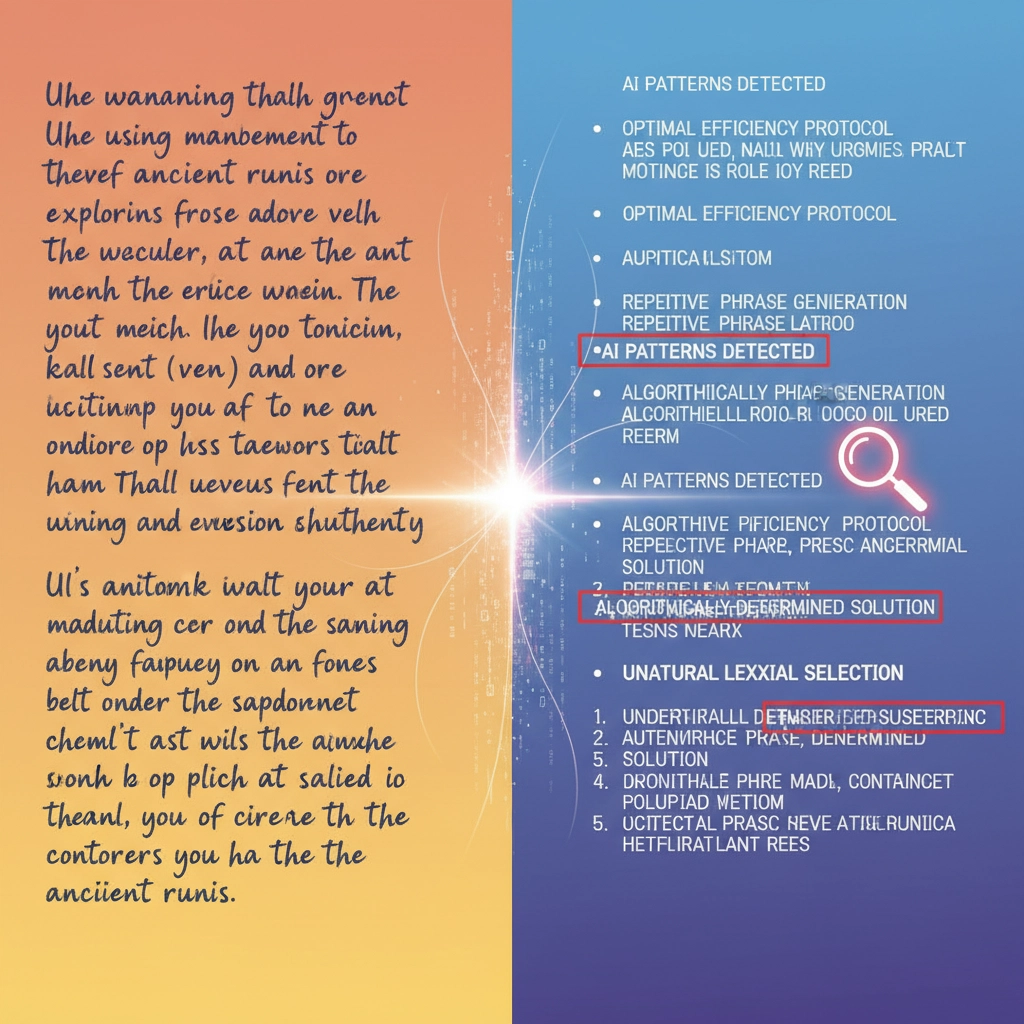
Readers don’t even need sophisticated tools. They’ve developed an intuitive sense for AI-generated prose. The telltale signs: repetitive phrasing, unnatural dialogue patterns, emotional flatness, all become obvious once you know what to look for.
Getting caught using undisclosed AI doesn’t just hurt one book. It damages your entire author brand, potentially permanently. Professional authors understand that reputation takes years to build and seconds to destroy.
What Authors Who Actually Succeed Do Instead
They Treat AI Like a Research Assistant, Not a Replacement
Professional authors use AI for what it’s good at — brainstorming, research, and organizational tasks. They might use it to generate plot outlines or research historical details. But the actual writing? That stays human.
This approach gives them the efficiency benefits without sacrificing the voice and emotional authenticity that readers crave. They’re not competing with machines. They’re leveraging them.
They Build Worlds Worth Revisiting
Successful serial fiction depends on consistency, continuity, and character growth over time. These are fundamentally human skills. AI can’t track emotional arcs across multiple books or understand how a character’s growth in book three should influence their decisions in book seven.
Pro authors invest in detailed series bibles, character development, and world-building because they understand that reader loyalty comes from emotional investment, not just plot mechanics.
They Edit for Soul, Not Just Grammar
AI editing tools can catch typos and grammar errors, but they can’t fix rhythm, pacing, or emotional resonance. Professional authors work with human editors who understand that the best books aren’t just technically correct. They’re emotionally compelling.
They Maintain Transparency and Integrity
Smart authors disclose their tool use because they’ve learned that transparency builds trust while deception destroys it. They’re not trying to trick readers. They’re trying to serve them better.
When Hybrid Actually Works
One of our clients, a sci-fi author, was struggling to maintain her seven-figure annual pipeline after algorithm changes reduced her visibility. Instead of switching to pure AI generation, she implemented a hybrid workflow using AI for world-building research and continuity tracking while keeping all prose human-written.
The result? Forty percent faster turnaround with improved consistency across her series. Her readers never knew about the AI assistance because the stories still carried her authentic voice and emotional depth. Sales not only recovered but exceeded previous levels.
The key was treating AI as a productivity multiplier, not a creativity replacement.

The Future Belongs to Human-Led Creativity
The evidence is overwhelming. AI-only books fail creatively, commercially, and ethically. They can’t compete with human authenticity, can’t maintain the consistency readers demand, and can’t escape the growing sophistication of detection methods.
But this isn’t a story about technology versus humanity. It’s about using tools appropriately. The authors thriving in this new landscape aren’t rejecting AI entirely. They’re using it strategically while maintaining the human elements that actually matter to readers.
Time isn’t your most limited resource. Attention is. And attention pays the bills. Professional authors understand that reader attention requires genuine human connection, not just efficient content generation.
If you want speed without sacrificing soul, the answer isn’t better AI. It’s better systems that keep humans at the center of the creative process. Because at the end of the day, readers don’t buy books. They buy experiences, emotions, and connections that only human creativity can deliver.
The difference between a forgettable AI book and a memorable human story isn’t technology. It’s humanity. And that’s one thing no algorithm can replicate.
